Worth investing in a LIMS?
Understanding Return on Investment (ROI) of a LIMS will help you drive your business plan to get a LIMS in your laboratory. Here are some useful tips as to how to go about this task.
Understanding Return on Investment (ROI) of a LIMS will help you drive your business plan to get a LIMS in your laboratory. Here are some useful tips as to how to go about this task.
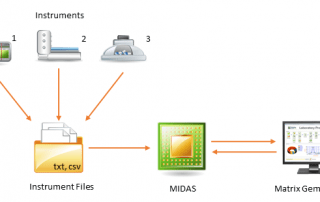
Direct instrument integration into the LIMS eliminates this possibility and helps meet data integrity and validity requirements.
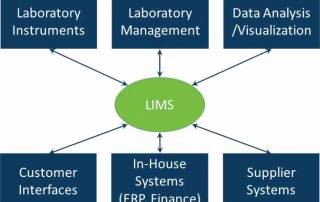
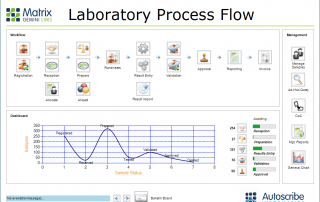
LIMS have evolved to manage the laboratory workflow, organize the data efficiently and support the business of the laboratory. In addition they can drive and support regulatory and standards compliance.
Stability studies are used to assess the shelf life of a product by storing samples under controlled environmental conditions for defined lengths of time prior to testing.
A cornerstone of the ISO 17025 requirement for laboratories to demonstrate they operate competently and are able to generate valid results.
LIMS are well known for their ability to manage sample data and their associated test results. However, many lab managers may be surprised at how LIMS can also help with many other laboratory management functions to improve efficiency and help support the needs of industry standards and regulation such as ISO/IEC 17025 and GxP.
The global pharmaceuticals market is worth over $750 billion a year, a figure that is expected to continue to rise. In a highly competitive and increasingly expensive market place it is important that cost efficiencies are maximized, while meeting all critical compliance requirements.
The Food Standards Modernization Act (FSMA) is driving producers towards LIMS & BIMS solutions.
Pittcon 2019 sees the latest version of Matrix Gemini LIMS (Laboratory Information Management System) from Autoscribe Informatics. Showcasing Matrix Instrument Data Acquisition System (MIDAS) and other new features.
Discover the benefits of implementing LIMS and BIMS solutions into food testing laboratories in today's FDA regulated food manufacturing environments.